Excellent work, it looks like you are making good progress. A couple of questions - what do you plan to do about the raised intake detail on the bottom of the nose cowling? I think these should be slots. Also, do you plan to replace the exhaust pipes? They seem to be an odd flattened shape which I can't find in any photographs. They usually seem to be round at the end (but maybe I haven't seen all the relevant photos....).
Thank you. I'm not sure I fully understand the issue of the cover. Can you explain which place you mean? As for the exhausts, I haven't analyzed the subject yet.
Merian C. Cooper - A Testament of BraveryIn a previous post, I introduced Lt. Merian C. Cooper and his service up to the end of WWI on the Western Front. Today, I'd like to share a remarkable and lesser-known account of his courage'an original, handwritten report by 1st Lt. Edmund C. Leonrad, documenting a dramatic episode on September 26th, 1918, when Cooper nearly lost his life saving his wounded observer - the author of these words.

📝 Original report (transcription):
First Lieut. Merian C. Cooper
For extraordinary heroism in action in the Argonne on the 26th September, 1918.
Lieut. Cooper, pilot, with Lieut. Leonard, observer, was flying one of a bombing formation of eight DH4 Liberty's, when they were attacked by 12 Fokkers after the bombs had been dropped. A bullet grazed Lieut. Cooper's head, Lieut. Leonard was wounded and the motor caught on fire.
Lieut. Cooper put the plane into a spin in an unsuccessful attempt to extinguish the fire. It was so painful that he (Lieut. Cooper) unfastened his safety belt and was in the act of jumping out to escape the agony of the flames when he remembered Lieut. Leonard in the rear seat and not knowing whether Lieut. Leonard was alive or dead, he stayed in the plane.
Lieut. Cooper suffered untold torture for the sake of another rather than end his own pain at the expense of a comrade. Lieut. Cooper succeeded in extinguishing the flames in the air and bringing the plane safely to the ground, at La Monnerie in German territory. Both Lt. Cooper and Lt. Leonard were prisoners in Germany until after the armistice was signed.
- Edmund C. Leonrad, 1st Lt. 95th Aero Squadron, U.S.A.
Edward J. Corsi - The Forgotten Hero of the Kościuszko SquadronWhile the story of the Kościuszko Squadron often highlights the legendary Merian C. Cooper and Cedric Fauntleroy, there's another name that deserves our attention - Edward J. Corsi, a pilot whose contributions were just as significant, though less widely remembered. It's time to bring his story back to light.
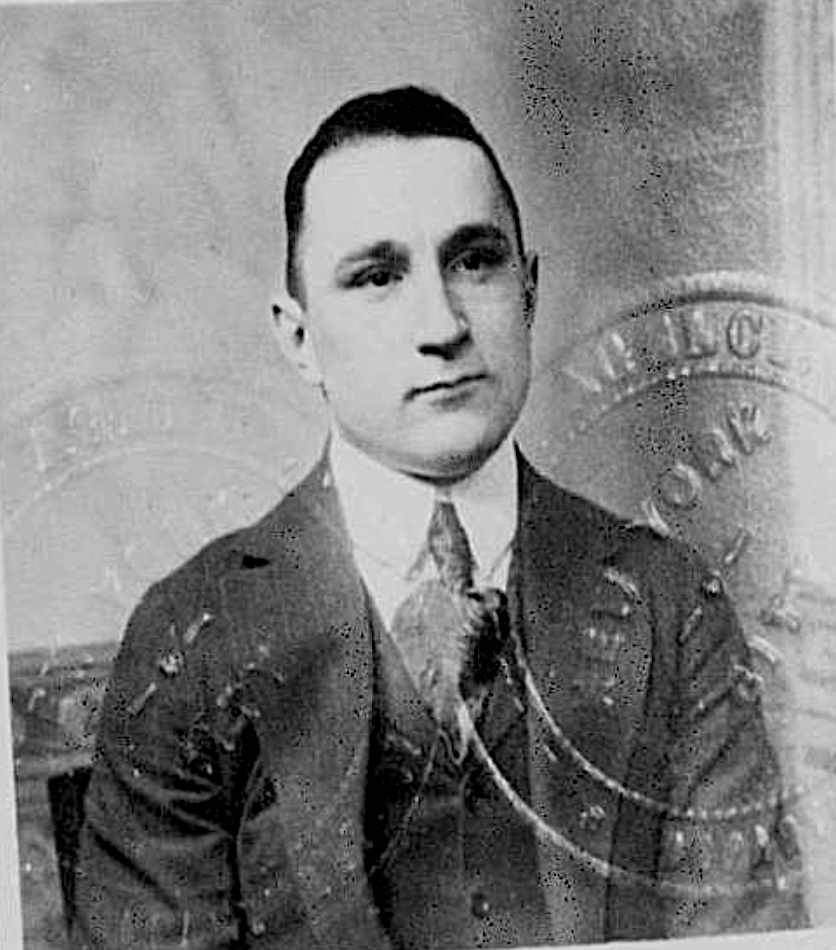
Born in Brooklyn, New York, Corsi volunteered for service in 1916 with the American Red Cross and served as an ambulance driver on the Western Front. Seeking more active duty, he joined the French Foreign Legion and later trained as a pilot at the Bl'riot school in Avord, France.
By his own account, Corsi was not a natural aviator - he had to work hard to earn his wings. After earning his brevet, he continued training at Pau, Cazaux, and G.D.E. He gained a reputation for being a methodical and brave pilot, even serving briefly as an instructor before being posted to the front.

On May 30, 1918, he was assigned to SPAD Squadron 77 and flew numerous combat missions until the end of the war. He was wounded in action, but made a full recovery in a French hospital. For his service, Corsi was awarded the Croix de Guerre with palm and star, recognizing his exceptional bravery. At the end of the war, he held the rank of sergeant.
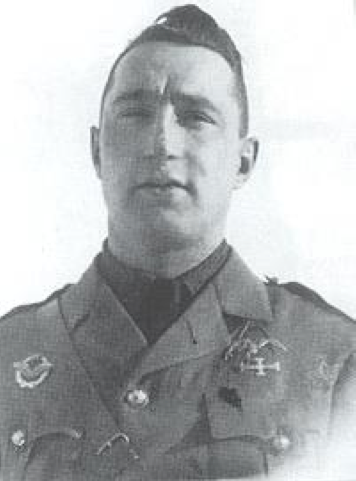
Instead of returning home, Corsi remained in Europe with the American occupation forces in Germersheim, Germany. It was likely there that he heard of Cooper's plan to form a squadron of American volunteers to aid the newly reborn Polish Republic in its struggle against the Bolsheviks.
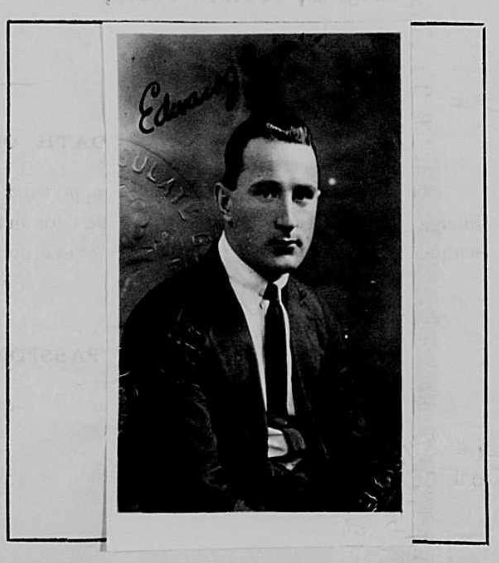
He arrived in Poland in 1919 and became one of the very few Kościuszko Squadron pilots to serve from the earliest operations in Ukraine through the Dnieper offensive, and finally the dramatic defense of Lw?w (Lviv) against Budyonny's Cavalry Army.
Always ready to fly, to fight, and to support his comrades - that was Edward Corsi.
More on his service in Poland to come in future posts.
Cheers,
Lukasz

