Author Topic: OEFFAG D.III "2" & "5" - 7th Kosciuszko Sqn M. Cooper & E. Corsi | Lukgraph 1/32  (Read 14415 times)


Offline Umlaufmotor

  • Hero Member
  • *****
  • Posts: 1217
I like - regardless of the historical aspect - the enormous effort you put into the model.
Piece by piece, a in my opinion unnecessarily imprecise in some places 3D printed resin kit, becomes a beautiful OEFFAG-Albatros corresponding to the original.
Hats off for the effort you put into adapting the wrong, much too angular fuselage contour to the original - it's no child's play to get the engravings correct.
It's a pity that you weren't successful in creating the rows of nails with the rivet wheel - that would have been my hope for my own OEFFAG D.III, which I still have on the shelf.
I personally have some reservations about rows of nails with decals, because the decal heads are usually a bit too big and too present - I think that the nails should only be very subtly noticeable.
But anyway - I like it here in this build report ..... One more comment, the pictures are sometimes a bit too bright against the background.

Servus
Bertl

Translated with DeepL.com (free version)

Offline Allan31

  • Hero Member
  • *****
  • Posts: 775
You're having way too much fun Luka....
Thanks,
Allan Buttrick

Youth, talent, hard work, and enthusiasm are no match for old age and treachery.

Offline Alexis

  • Hero Member
  • *****
  • Posts: 8352
  • Love the self
Amazing stuff !


Alexis
Hurra ! , Ich Leben Noch
Body and life is a vessel we use to travel the planet . Femininity is the gift , The miracle comes from what we do with it .

Offline Boch

  • Full Member
  • ***
  • Posts: 163
I like - regardless of the historical aspect - the enormous effort you put into the model.
Piece by piece, a in my opinion unnecessarily imprecise in some places 3D printed resin kit, becomes a beautiful OEFFAG-Albatros corresponding to the original.
Hats off for the effort you put into adapting the wrong, much too angular fuselage contour to the original - it's no child's play to get the engravings correct.
It's a pity that you weren't successful in creating the rows of nails with the rivet wheel - that would have been my hope for my own OEFFAG D.III, which I still have on the shelf.
I personally have some reservations about rows of nails with decals, because the decal heads are usually a bit too big and too present - I think that the nails should only be very subtly noticeable.
But anyway - I like it here in this build report ..... One more comment, the pictures are sometimes a bit too bright against the background.

Servus
Bertl


Thank you very much for your kind words. I appreciate that you left a comment. I have another idea for the nail lines to skip the tracing paper, but it seems that making double and triple rows will be quite risky, so I decided to use tracing paper. I plan to recreate all the lines according to the documentation sent to me by Craflab. We'll see how it turns out in the end. I haven't done it myself yet, so it's also a journey into the unknown for me. I hope that together we will evaluate the effect and draw conclusions from my workshop for the future, is it worth going down this path?

You're having way too much fun Luka....

Translated with DeepL.com (free version)

hehe, thank you  :P

Amazing stuff !

Alexis

Thank you Alexis :) Regardas


Lukasz

Offline Boch

  • Full Member
  • ***
  • Posts: 163
MERIAN C. COOPER - HISTORY

General Tadeusz Rozwadowski, one of Poland's most prominent commanders during the Great War and the border conflicts that followed, was an early advocate for forming a volunteer unit composed of American pilots. His initiative aligned perfectly with Merian C. Cooper's growing desire to serve Poland. By the spring of 1919, Cooper had come to feel that his humanitarian work was no longer enough - the geopolitical situation made it clear that a clash with the Bolsheviks was inevitable.


Merian Cooper and Cedric Fauntleroy

It's unclear when exactly Cooper's intention to serve individually evolved into the idea of forming an entire squadron. However, it likely happened between March and April 1919. Around this time, Gen. Rozwadowski became head of the Franco-Polish Military Mission in Paris?a city where thousands of American soldiers were still stationed. Cooper, however, chose to proceed cautiously. First, he sought official permission for individual service from Poland's Chief of State.

On April 29, 1919, Cooper wrote a letter to Jozef Piłsudski. The contents offer insight into the American volunteer's motivation:

"My family considers it my duty - and it is also my sincere wish - to offer my services to Poland in her struggle for freedom. For this reason, I asked to be sent to work for Poland with the American Relief Mission. As an officer of that mission, I was responsible for the distribution of American food supplies in Lwow during the last two months of siege and bombardment.

Now, however, as my country is no longer at war, I feel that my duty is to serve in a combat unit. If the Republic of Poland is willing to accept my services, I will immediately seek assignment or permission to take on any duty the Polish government deems appropriate, on the condition that I be posted to a combat unit at the front. [...] I would also appreciate being informed of the rank I would hold, although I am ready to serve at the front regardless of rank."


The letter's tone is strikingly personal. Cooper made no mention of forming a squadron at this point, but it is clear he was ready to take off his American uniform and join the ranks of the Polish Army. Before leaving Poland for Paris (at the end of his humanitarian mission), he managed to meet with Piłsudski - most likely in early May 1919. Sadly, no reports or documentation from this meeting have survived. Cooper later recalled that the meeting was arranged by Gen. Rozwadowski. We also know that Piłsudski initially regarded Cooper as a typical mercenary - chasing glory and money. When Cooper heard this, he firmly objected, stating that he would not accept a single cent more than what a Polish officer of equal rank would receive, and that any promotion should be earned solely through frontline merit.
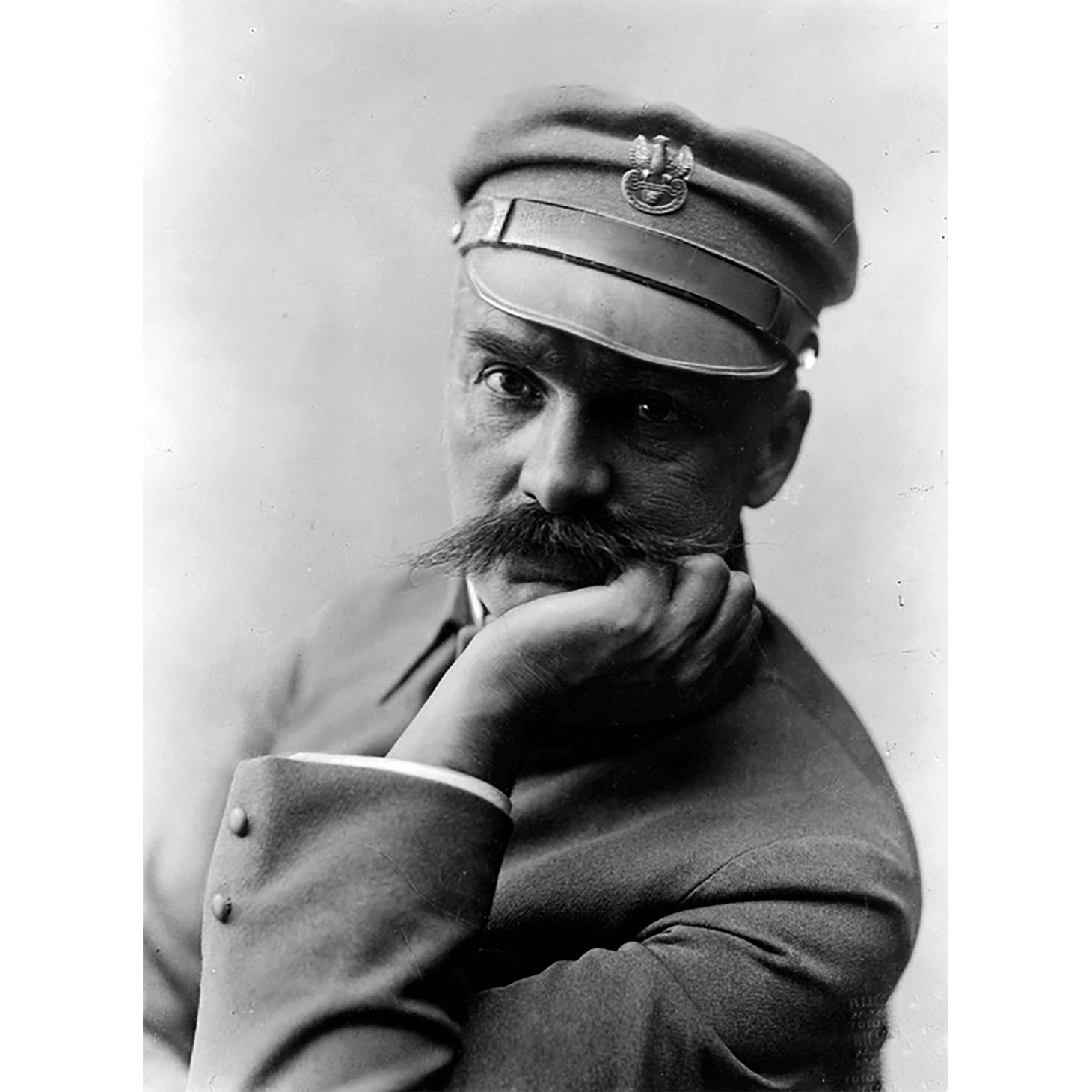

Chief of State J?zef Piłsudski

Following this conversation, Cooper not only received approval for individual service but also for forming a volunteer air squadron. Its members were to serve under the same conditions as he did.

Cooper soon departed for Paris to officially demobilize from the U.S. Army. The French capital was still celebrating victory and the war's end. There, in a small caffe near Place d'Alma, a chance - but significant - meeting occurred. Captain Merian C. Cooper ran into Major Cedric Fauntleroy. The two had trained together at the AEF center in Issoudun, although their paths had since diverged.


Major Cedric Fauntleroy

Fauntleroy, born November 22, 1891 in Church Hill, Mississippi, was a restless spirit - he ran away from home at 14 and worked various jobs, including as a mechanic and cattle driver. After the sinking of the Lusitania, he joined the aviation service. During the war, he served with the famed 94th Aero Squadron 'Hat in the Ring' - though he was primarily known as an excellent test pilot.

After a long conversation, Cooper shared his idea. Fauntleroy was clearly intrigued and immediately committed himself to planning the next steps.

The two aviators quickly received support from Rozwadowski, who issued a letter of recommendation authorizing them to recruit volunteers. This letter was later quoted in The New York Times on August 28, 1919, after the recruitment effort had concluded. Interestingly, the name "Kościuszko Squadron" already appeared in this letter - suggesting it had been conceived and approved before recruitment even began, likely during the earlier meeting with Rozwadowski.


Many individuals became involved in the recruitment and promotional efforts. Both officers agreed that candidates would need to be selected with utmost care. The coming war would present challenges very different from the one they had just fought. They knew conditions in Poland would be harsh, and success would depend on determination, creativity, and both physical and mental resilience. They sought experienced, daring pilots with a flair for risk?and a genuine commitment to the Polish cause.

Recruitment continued through July and August. It ended on August 26, 1919, when the major and captain reported to Gen. Rozwadowski that they had successfully enlisted eight volunteers ready to depart for Poland.

To be continued...

_________________________________________________________________________________________________________________________________________________________

OOEFFAG D.III - WORKSHOP UPDATE

Painting the Panels and Leather Cockpit Rim

Work on the interior of the fuselage continues. Obligations still make it hard to stay as engaged as I'd like, but I've set a goal: to finish the interior before joining the fuselage halves. Day by day, I managed to push things forward.

This time I focused on separating the engine access panels and preparing them for painting. Everything got a black primer coat, followed by surface modulation using a mix of colors, then silver, and finally chipping and wear. Doesn't sound like much, but masking four fuselages and rotating the paint stages took me several evenings. Luckily, I'm satisfied with the final effect - just one last step before simulating the wood grain.


Next came the leather cockpit rim. Access to this area will be limited once the fuselage halves are joined, so I decided to paint the interior portion now. More masking - time-consuming, but not difficult with some patience. After applying a dark brown base color, I added highlights and cracking using the dry brush technique.


Wood Grain Painting

Time to simulate wood. I used oil paints - artist-grade, which have worked well for me in the past. To introduce some visual variety, I opted for two wood tones: a slightly mahogany one around the engine section and a more classic tone for the rest. Not much of this will remain visible, but since I'm taking photos anyway, I couldn't leave it half-baked.


The resin-printed surface turned out to be a bit different from plastic - less smooth, which affected the brushwork when simulating wood grain. This required a slight adjustment in technique, but the results are satisfying. Now it'll sit for at least 24 hours before I apply a protective varnish coat.

If you'd like to see a video of this stage, it will be up soon on my socials. As always, links are in the footer.

That's all for today!

Cheers,
Lukasz

« Last Edit: May 14, 2025, 05:31:37 PM by Boch »

Offline PrzemoL

  • Hero Member
  • *****
  • Posts: 5668
  • There was Eru... and he made first the Ainur...
    • Przemysław Litewka
Great, great, great... As usual  :)
Ash nazg durbatuluk, ash nazg gimbatul,
Ash nazg thrakatuluk, agh burzum-ishi krimpatul.

Offline Boch

  • Full Member
  • ***
  • Posts: 163
Great, great, great... As usual  :)

Thank you very much Przemek :)

Lukasz

Offline AngryJazz

  • Hero Member
  • *****
  • Posts: 611
    • @AngryJazz_Models
Love the wood painting! Looking forward to the video  ;D
//Ben - @AngryJazz_Models

Offline Boch

  • Full Member
  • ***
  • Posts: 163
Oeffag D.III - Workshop Update

Over the past few weeks, I've been fully immersed in working on the cockpit components. Quite a lot of small, complex parts - each one a little challenge on its own. I knew that most of them would remain barely visible once the model is assembled, but I still decided to give it my best and finish them to the highest standard I could.


What was the challenge?

The biggest difficulty was replicating the mixed construction of the real components?mostly wood and metal - within a single miniature part.

The first step was carefully cleaning up the prints. Although the quality is excellent, a bit of sanding with fine paper and sponges made everything ready for painting.


_____________________________________________________________________________________________________________________________________________________________________________________


Wood and priming

Priming everything and preparing the surfaces for wood grain finishes went smoothly. The real challenge came afterward?tedious masking work to isolate metallic surfaces from the woodgrain areas. That alone took me over a week.

RP Toolz punches proved extremely useful here, especially for creating circular masks for gauges and control stick mountings. I carefully masked off all the 'yellow' areas intended for wood treatment.


_____________________________________________________________________________________________________________________________________________________________________________________

Metal and details
Fuel tanks, ammo containers, and the throttle system were all primed in black as a base for the metallic paint. At the same time, I painted the seats and cushions in appropriate shades.

Then came the weathering and variation work - to make everything look worn and operational, as if it had seen some hard service in the field. For the metal areas, I used my go-to paint set, applying shadows, highlights, and grime step by step.

At some point, I also introduced silver tones into the mix, without abandoning the previous colors. In total, each component received around a dozen layers of paint and effects. Quite a bit of work, but definitely worth it.


_____________________________________________________________________________________________________________________________________________________________________________________

Revealing and touch-ups
After removing all the masks, I noticed a few spots that needed touch-ups - mainly where masking wasn't perfect or I had accidentally damaged the paint with tweezers. I corrected those with a fine brush. All these areas will be blended later with oil washes, which will even out the finish and add depth.


That's it for today.

Cheers,

Lukasz

Offline NigelR

  • Hero Member
  • *****
  • Posts: 2703
That looks like a lot of work! Good to see the build is progressing.

Offline Alexis

  • Hero Member
  • *****
  • Posts: 8352
  • Love the self
The joys off masking , results paid off awesome !


Alexis
Hurra ! , Ich Leben Noch
Body and life is a vessel we use to travel the planet . Femininity is the gift , The miracle comes from what we do with it .

Offline Boch

  • Full Member
  • ***
  • Posts: 163
That looks like a lot of work! Good to see the build is progressing.

The joys off masking , results paid off awesome !

Thank you :)

I've always followed the - one build - one model - principle. It keeps me focused and helps avoid the dreaded half-finished project syndrome. However, a unique opportunity has come up, and as a result, this build log will be temporarily put on hold.

To all those following and supporting this project - please accept my sincere apologies for the interruption. I can only promise that once work on the J2F-5 is completed, I will absolutely return to the Oeffags. I've already poured too much heart into them, and more importantly - it's a story that deserves to be finished.


So, until then - see you soon!

Lukasz